Required equipment | Multi-Stage Flash - MSF, Multi-Effect Distillation - MED | Reverse Osmosis - RO | ARBOK™ |
Pumps | YES | YES | YES |
Electric motors, drivers | YES | YES | NO |
Membranes | YES | YES | NO |
High pressure | YES | YES | NO |
Catalysts | YES | YES | NO |
Preclearing | YES | YES | NO |
Additional clearing | YES | YES | NO |
High temperature equipment | YES | NO | NO |
How this all can be achieved?
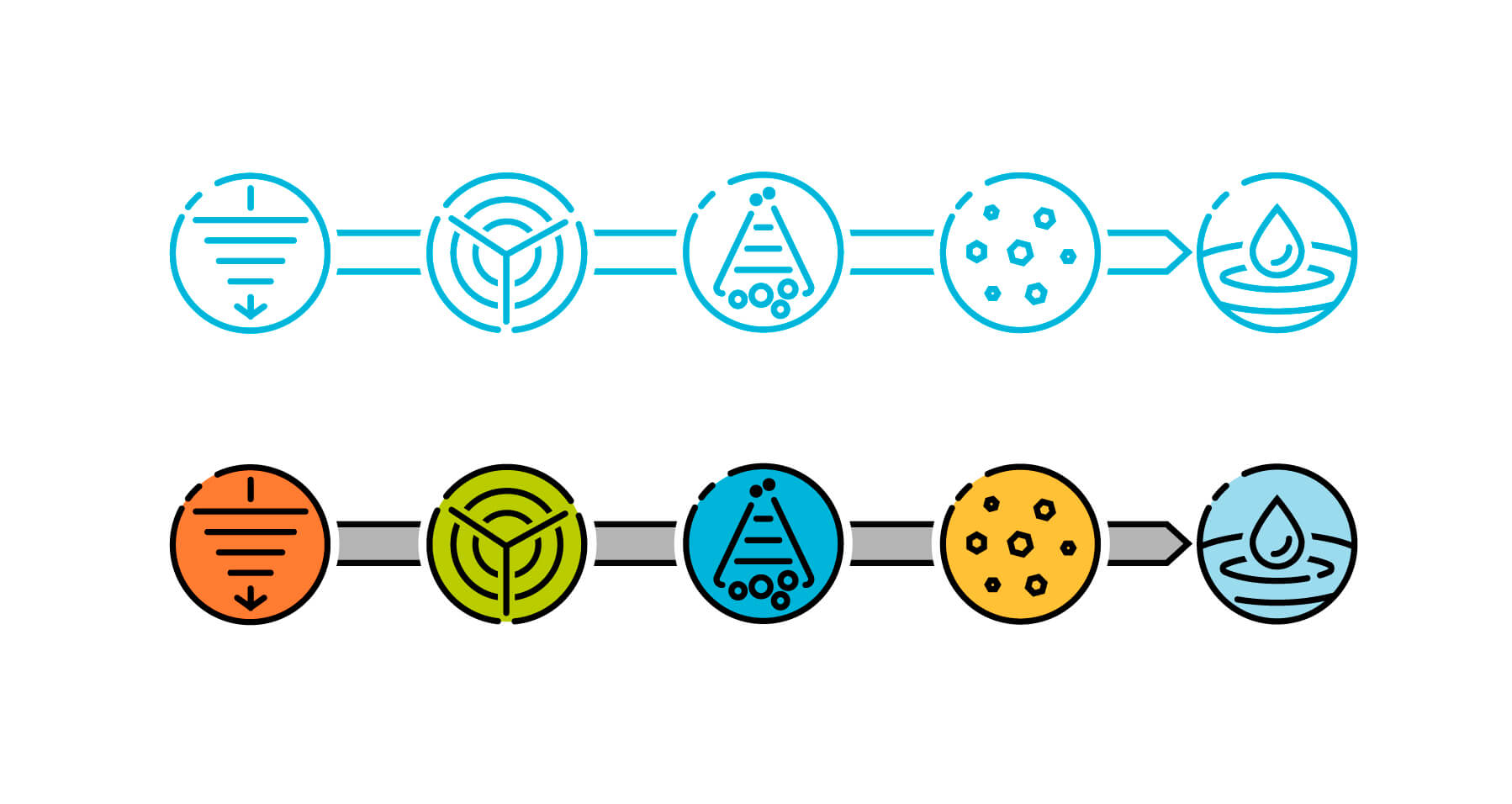
The latest generation desalination unit has two chambers for the evaporation and for the condensation. A deep vacuum is created in both of the chambers using a vacuum pump.
The seawater or brine to be treated is fed directly into the evaporation chamber.
The feed water starts boiling in the evaporation chamber. Because of the low temperature of 4-6 degrees celsius, it is a cold boiling procedure.
In this chamber the water and the salt molecules are separated during inter-band transition cycle.
After the transition the vapor is transferred to the condensation chamber the generated steam concentrates and condensates into clean drinking water energy is recuperated into the evaporation chamber to intensify cold boiling process.
The result is a consumption ready, slightly mineralized, superior-quality soft potable water.
To assure the quality of the process various controllers and sensors regularely monitor the internal thermodynamic conditions in order to maximize evaporation and condensation intensity throughout the procedure.
Apart from water the only output is the solid salt which can be removed without interrupting the desalination process.
The RO ( Reverse Osmosis ) technology is the most common used one, that is why we also compared the two technologies separately.
RO plant model | RO with Arbok brine solution |
On average, 30-50% of the feed water is considered as brine in RO plants | Brine will be recycled, nearly doubling fresh water output |
Economically seen there is no reason to increase the share of potable water within the viable technology | Arbok can supply devices directly to an RO plant, who can operate them by itself |
Technology | Advantages | Limitations | Energy consumption |
Arbok | Most energy/cost efficient High fault tolerance Modular | Emerging technology ( not well known ) | Seawater: 0,65-0,8 kW/m3 with no salinity limit |
Reverse Osmosis (RO) | Energy efficient MOdular Technical maturity | Limited salnity range ( <75.000 mg/L ) High fouling propensity | Seawater: 2-4 kWh/m3 Brackish water: 1,5-2,5 kWh/m3 |
Electrodialysis (ED/EDR) | High salinity limit ( > 100.000 mg/L ) Low fouling propensity | High energy consumption Removes only charged contaminants | 7-15 kWh/m3 |
Forward Osmosis (FO) | High salinity limit ( > 200.000 mg/L ) Low fouling propensity | Water flux lmitations Emerging technology | 21 kWh/m3 |
Membrane destillition (MD) | High salinity limit ( > 200.000 mg/L ) Low fouling propensity | Low water flux and recovery Emerging technology | 40 kWh/m3 |
Mechanical Vapor Compression (MVC) | High salinity limit ( > 200.000 mg/L ) Technical maturity | High energy consumption HIgh capital Not modular | 20-35 kWh/m3 |
Required equipment | Multi-Stage Flash - (MSF) Multi-Effect Distillation - (MED) | Reverse Osmosis - (RO) | Arbok |
Pumps | Delivery pump Circulation Pump Pump for the high density environment Network pumps | The multistage centrifugal pump For some systems are pumps needed Network pumps | Delivery pump Circulation pump Vacuum pump |
Electric motors, drivers | Drive of pumps Circulation drive Drive for the pump of the brine Engine of the network pump 3-phase high capacity engines with a high electric current | Drives for multistage centrifugal pump Engine of the network pump 3-phase high capacity engines with a high electric current | NO or low power single-phase engine |
Membranes | Big fraction membranes Condensation membranes Membranes of decrystallization | Membranes elements of nanofiltration Membranes of primary clearing | NO |
HIgh pressure | Pressure head cases | Pressure head cases | NO |
Catalysts | Blocks inhibiton Blocks of acceleration of reaction | Inhibition module | NO |
Preclearing | Preclearing membranes | Preclearing cartridges | NO |
Additional clearing | Block additional clearing | Block additional clearing Backterial lamps | NO |
High temperature equipment | Filched heating and temperature stabilization | NO | NO |
The most common used desalination technology is the reverse osmosis ( RO ) which is a mature technology. It is a proven solution, well known, but is has limitations.
Main challenges are:
An RO system is not difficult in it’s own way, the structure is logical, every unit has its own reason.
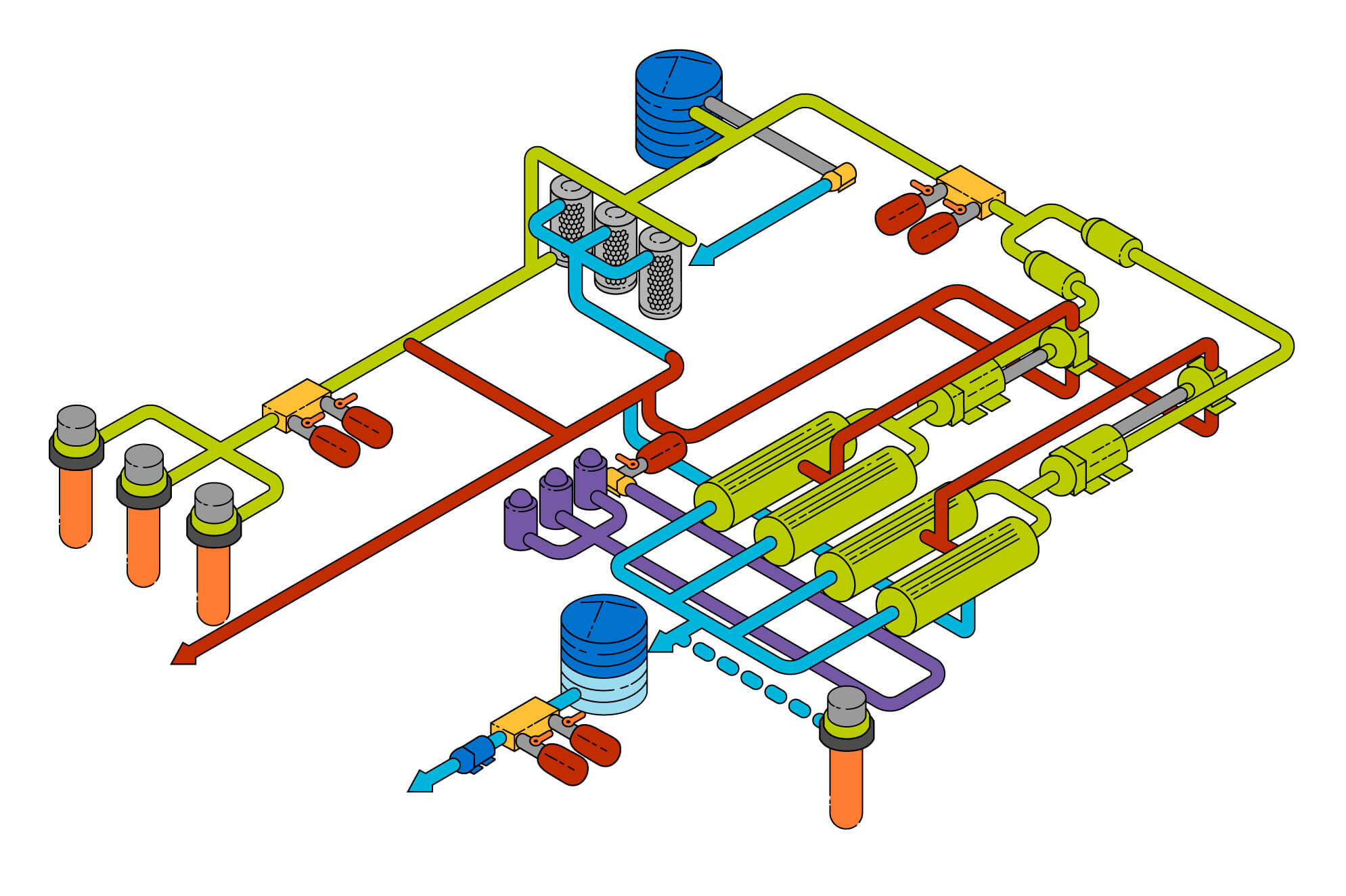
However, if we compare an RO plant and our Arbok system the difference is obvious.
Reverse osmosis
Arbok
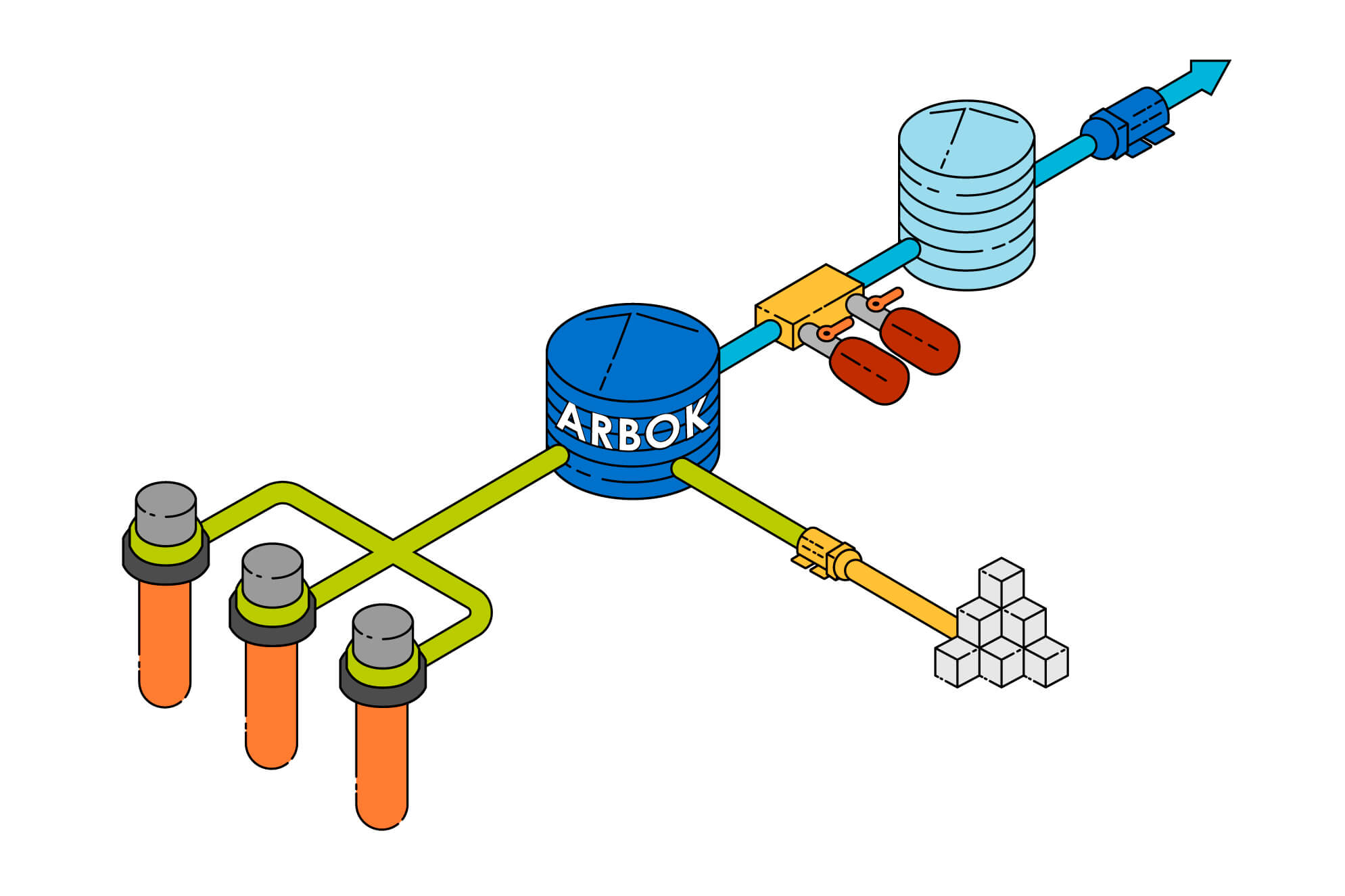
The figures express the main differencies, and here is a table with the details:
PRODUCT/ SERVICE | RO | ARBOK | COMMENTS |
Electricity consumption (NET) | 3-7 kW / h | 1 kW / h | - |
The output of drinking water from the sea (in per cent) | 30-50 | ± 96 | - |
Residue (brine) formation | 30-50% | 0 | Disposal of brine is a complicated and expensive business, dumping brines back into the sea (as they did before) is prohibited. RO takes double amount of seawater and supply 50% of it to the water pipeline. The rest 50% it discharges back to the sea. Arbok takes and desalinate 100% m3 of seawater. |
The need for consumables | YES | NO | RO – costlier membranes and filters (they are not unified, purchased only from the equipment manufacturer or Chinese counterfeits). High cost, the need to stop production. The need for replacement and maintenance personnel. |
Water quality | Water with high boron, requires additional mineralization, which is associated with additional costs and stoppages in the desalination process. | Drinkable slightly mineralized sterile water with good consumption properties. No need for additional mineralization. | - |
Salinity | up to 200,000 ppm/TDS | 50,000 and up ppm/TDS | Arbok may desalinate any salinity of the seawater, including brine of any concentration rate |
Operating pressure | up to 150 Bar | -1 Bar | Arbok is fully safe in operational mode. RO requires protection. |
Water temperature | up to 40 degrees C | up to 100 degrees C | - |
Water quality precondition | The feedwater must be free of Fe3 and bacterial contaminations. Need a preserve. | The feedwater does NOT NEED TO be free of any heavy salt dissolved and bacterial/viral contaminations. No need any preserve. | - |
Equipment cost (net cost) | 6$ per 1 m3 per year production | 5$ per 1 m3 per year production | The coefficient of equipment cost in relation to the annual volume of fresh water output is 6-7 for RO, Arbok - 4,5-5 (prices of 2022). |
Permission to use | Most prohibited | Permitted | Arbok is totally friendly, safe and certified technology (EU CE) |
Possibility of utilization of brines | NO Brine discharges back to the sea, killing the environment. | Can utilize the brine obtained from RO with the production of drinking water and 8-9% of dissolved salt in brine in a dry form (technical dry salt as a market commodity) | - |
The possibility of using the technology for cleaning other contaminants | YES | YES | - |
The need for backup equipment | It is necessary to have a powerful backup power source in case of an emergency power outage plus the availability of a standard set of spare parts. | A standard set of spare parts is available only. | Arbok’s OPEX is 3 times less. Arbok’s CAPEX is 1.5 times less in comparison to RO. |